Artificial intelligence is rapidly becoming one of the most influential technologies of the modern era. From conversational assistants and recommendation systems to autonomous machines, predictive analytics, and generative tools, AI is changing the way people work, communicate, create, learn, and solve problems. 🤖💡
The idea of AI Next represents the continuing evolution of artificial intelligence toward systems that are more capable, accessible, collaborative, personalized, and deeply integrated into everyday digital experiences.
The next stage of AI is not simply about building larger models. It is also about creating technology that can understand context, work with different types of information, interact naturally with people, use tools, automate complex workflows, and operate responsibly.
Businesses are exploring AI to improve productivity. Educators are investigating new approaches to personalized learning. Healthcare researchers are studying ways AI can support diagnosis and scientific discovery. Developers are using intelligent systems to accelerate software creation. Creative professionals are experimenting with AI-generated images, audio, video, and text. 🌎✨
At the same time, the growth of AI creates important questions about privacy, security, employment, bias, copyright, transparency, and responsible innovation.
Understanding the future of AI therefore requires looking beyond technological excitement. It requires considering how intelligent systems will fit into human society.
This article explores the concept of AI Next, its major technologies, applications, opportunities, challenges, and potential impact on the future.
🧠 What Does AI Next Mean?
AI Next can be understood as the emerging generation of artificial intelligence technologies and applications that go beyond traditional automation and prediction.


Traditional software generally follows instructions written by programmers.
AI systems can identify patterns in data and generate outputs based on learned representations.
Generative AI takes this capability further by creating new content such as text, images, music, software code, and other forms of media.
The next generation is expected to become increasingly capable of performing multi-step tasks.
Instead of simply answering a question, an AI system may be able to understand a goal, break it into smaller actions, use appropriate tools, evaluate results, and adapt its approach.
This shift can transform the relationship between people and software.
Instead of opening separate applications and manually moving information between them, users may increasingly interact with intelligent systems that coordinate multiple tools.
Imagine asking an AI assistant to help prepare a business report.
The system could organize information, analyze a spreadsheet, summarize relevant documents, create charts, draft an explanation, and prepare a presentation.
The human remains responsible for reviewing the result and making important decisions, while AI assists with repetitive and information-intensive work.
This type of collaboration represents an important direction for AI Next.
🤝 Human-AI Collaboration
The future of AI does not necessarily mean replacing every human task.
In many situations, the most valuable approach may be collaboration.
Humans contribute judgment, creativity, empathy, experience, goals, and contextual understanding.
AI contributes speed, pattern recognition, information processing, automation, and the ability to work continuously.
Together, they can create workflows that neither humans nor traditional software could easily achieve alone.
🤖 Generative AI and the New Creative Landscape
Generative AI has become one of the most visible developments in artificial intelligence.


Generative systems can produce text, images, audio, video, software code, and other forms of content.
For writers, AI can assist with brainstorming, outlining, editing, summarization, and translation.
For designers, it can help generate visual concepts and explore different creative directions.
For programmers, AI tools can assist with code generation, debugging, documentation, and explanation.
For marketers, AI can help create campaign concepts, audience variations, and content drafts.
For educators, it can help create practice materials, explanations, and personalized learning resources.
The important change is that content creation can become more interactive.
Instead of creating everything from scratch, a person can describe an idea and receive a starting point.
The creator can then revise, critique, and refine the output.
This makes AI more like a creative partner than a simple automation tool.
🎨 Creativity With AI
AI-generated content also raises an interesting question: what does creativity mean when humans and machines collaborate?
A human may provide the concept, direction, style, constraints, and judgment.
The AI may generate multiple possibilities.
The human selects the strongest idea and develops it further.
This process can make experimentation faster.
However, originality and quality still require human judgment.
Generating thousands of possibilities does not automatically produce meaningful work.
Creative value often comes from knowing what to keep, what to remove, and why an idea matters.
💼 AI Next in Business and Productivity
Businesses are among the major adopters of AI technology.


Organizations can use AI across many departments.
Customer service teams can use intelligent assistants to handle routine questions.
Marketing teams can analyze customer behavior and develop content.
Finance teams can automate data processing and identify unusual patterns.
Human resources departments can use AI-assisted tools for administrative workflows.
Operations teams can use predictive analytics to improve planning.
Software teams can accelerate development.
The potential benefit is not simply reducing the time required for individual tasks.
AI can also change how organizations structure workflows.
For example, a traditional customer-service process might involve a customer submitting a request, an employee searching multiple systems, and then manually preparing a response.
An AI-assisted workflow could summarize the request, retrieve relevant information, suggest an answer, and identify cases requiring human attention.
The employee can then focus on complex situations rather than repetitive searches.
📊 Data-Driven Decisions
Businesses generate enormous quantities of information.
AI can help analyze large datasets and identify patterns that might be difficult for people to discover manually.
This can support decisions related to:
📈 Sales forecasting
📦 Inventory management
👥 Customer behavior
💰 Financial planning
🚚 Supply chains
📣 Marketing
⚙️ Operations
However, organizations must remember that AI predictions are not automatically correct.
Data quality matters.
Model design matters.
Context matters.
Human review remains essential for important decisions.
🏥 AI in Healthcare and Medicine
Healthcare is another area where AI Next could have significant influence.


Researchers are exploring AI applications involving medical imaging, drug discovery, clinical research, patient monitoring, administrative workflows, and scientific analysis.
Medical imaging is one example.
AI systems can be trained to identify patterns in images and assist professionals in examining scans.
In drug discovery, machine learning can help researchers analyze biological data and explore potential compounds.
In administrative healthcare, AI could help summarize documents, organize information, and reduce repetitive paperwork.
However, healthcare is a high-stakes environment.
AI systems must be carefully evaluated before being relied upon for important medical decisions.
Privacy is also critical because health information can be highly sensitive.
The most promising future may therefore involve AI supporting healthcare professionals rather than simply replacing them.
Doctors, nurses, researchers, and other specialists bring human judgment, communication, empathy, and responsibility.
AI can potentially provide additional analytical support.
🎓 AI Next in Education
Education is undergoing significant technological change.


AI can potentially make learning more personalized.
Students learn at different speeds and have different strengths.
An intelligent learning system could provide explanations at different levels, generate practice questions, identify areas of difficulty, and adapt exercises to individual needs.
Teachers can also use AI-assisted tools to create lesson materials, organize information, develop examples, and provide feedback.
But technology should not replace the teacher-student relationship.
Education involves motivation, social development, discussion, mentorship, creativity, and emotional support.
AI can provide additional tools, but educators remain central.
📚 Learning Beyond the Classroom
AI assistants can also make informal learning more accessible.
Someone interested in astronomy can ask questions about space.
A language learner can practice conversations.
A programmer can ask for explanations of unfamiliar concepts.
A student can request alternative explanations of difficult topics.
This can make learning more interactive.
However, students also need to learn how to evaluate AI-generated information.
An AI system can produce incorrect or misleading answers.
Digital literacy therefore becomes increasingly important.
💻 AI and Software Development
Software development is another field experiencing rapid AI adoption.


AI-assisted development tools can help programmers write code, explain unfamiliar functions, identify bugs, generate tests, and create documentation.
This can reduce the amount of repetitive work involved in software development.
But AI-generated code still needs human review.
Developers must understand architecture, security, performance, maintainability, and requirements.
An AI system can produce code that looks correct but contains subtle problems.
Therefore, the role of the programmer may increasingly shift toward reviewing, designing, testing, and directing intelligent tools.
This could make software development more accessible while also increasing the importance of higher-level technical understanding.
🔐 AI and Cybersecurity
AI can support cybersecurity by analyzing large amounts of network activity and identifying unusual patterns.
Security teams can use intelligent systems to prioritize alerts and investigate potential threats.
At the same time, malicious actors can also use AI.
This creates an ongoing technological competition.
Organizations therefore need strong security practices, human oversight, and continuous monitoring.
🌐 AI and the Internet
The internet is becoming increasingly intelligent.


Search engines, recommendation systems, translation tools, content platforms, customer-service systems, and productivity applications increasingly use machine learning.
The next stage could involve more personalized digital environments.
Instead of searching for information manually, users may interact with AI systems that understand their questions and organize relevant information.
This could make the web easier to navigate.
But personalization also raises questions.
How much should an AI system know about a user?
How should personal data be protected?
Who controls the information used to personalize experiences?
How can users distinguish trustworthy information from generated content?
These questions will become increasingly important as AI becomes embedded in digital services.
🦾 Robotics and Physical AI
AI is not limited to screens.
Robotics represents another important direction for AI Next.


Robots can combine AI with sensors, mechanical systems, computer vision, and navigation.
Applications include manufacturing, logistics, agriculture, healthcare, research, and household assistance.
Modern robots can increasingly perceive their surroundings and respond to changing conditions.
For example, a warehouse robot may need to identify objects, navigate around people, and adjust its path dynamically.
Humanoid robotics is also attracting significant attention.
The long-term goal is to develop machines capable of operating in environments designed for humans.
However, physical-world AI is particularly challenging.
Real environments are unpredictable.
Objects can move.
Lighting changes.
People behave unexpectedly.
Machines must therefore combine perception, reasoning, planning, and physical control.
🌍 AI and Climate Technology
Artificial intelligence can also contribute to environmental research and sustainability.


Researchers can use AI to analyze satellite imagery, weather data, energy consumption, and environmental measurements.
Potential applications include:
🌱 Monitoring ecosystems
☀️ Optimizing renewable energy
⚡ Improving electricity grids
🌊 Studying oceans
🌦️ Analyzing weather patterns
🚜 Supporting precision agriculture
🏙️ Improving urban efficiency
AI can help identify patterns in complex environmental datasets.
For example, machine learning can assist researchers in analyzing large quantities of satellite imagery.
AI can also support energy systems by predicting demand and optimizing resource distribution.
But AI itself consumes energy.
Large computing systems require electricity and infrastructure.
Therefore, the environmental impact of AI must also be considered.
The goal should be to develop increasingly capable systems while improving efficiency.
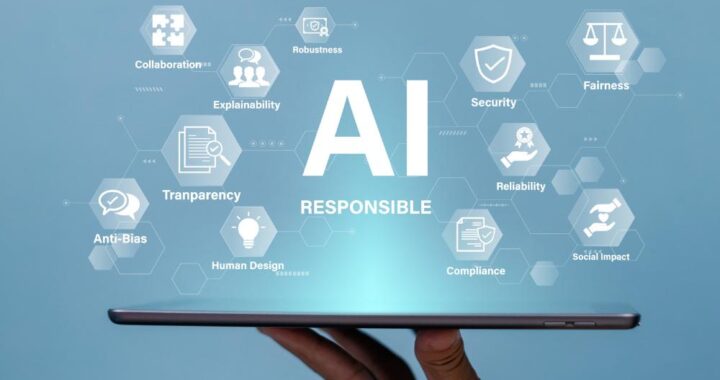
🔐 Privacy, Security, and Responsible AI
The rapid development of AI creates important ethical questions.


AI systems often depend on large quantities of data.
Some data can be sensitive.
Organizations must therefore think carefully about how information is collected, stored, processed, and shared.
Privacy is particularly important in areas such as healthcare, finance, education, and personal communications.
Security is another major concern.
AI systems can be attacked or manipulated.
Organizations need safeguards to prevent unauthorized access and misuse.
⚖️ Fairness and Bias
AI systems learn patterns from data.
If training data contains historical biases, models can sometimes reproduce or amplify those patterns.
This is why responsible AI requires careful evaluation.
Developers should test systems for different groups and contexts.
Organizations should establish clear accountability.
Users should understand when automated systems are involved in important decisions.
👁️ Transparency
People may want to know why an AI system produced a particular result.
This can be difficult with complex models.
Developing better methods for explaining AI behavior remains an important research area.
Responsible AI is therefore not a single feature.
It involves technical design, governance, testing, human oversight, and organizational responsibility.
🧑💼 The Future of Work
AI is likely to change many jobs.


Some tasks may become automated.
Other jobs may be transformed.
New roles may emerge.
The most important change may be the division of work between humans and machines.
Tasks involving repetitive data processing are often suitable for automation.
Human strengths such as empathy, leadership, negotiation, creativity, judgment, and relationship-building remain important.
This suggests that workers may increasingly need a combination of domain expertise and AI literacy.
For example, a marketer may need to understand AI-assisted content creation.
A lawyer may need to understand AI-supported legal research.
A teacher may need to understand intelligent tutoring tools.
An engineer may use AI-assisted design systems.
Learning how to work with AI could therefore become a general professional skill.
📈 Lifelong Learning
The rapid pace of technological change means education cannot end with graduation.
Workers may need to continually update their skills.
Short courses, professional training, online learning, workshops, and practical projects can help people adapt.
AI itself may become a learning assistant.
A person can ask an intelligent system to explain a new concept, generate exercises, provide examples, or help structure a learning plan.
This could make lifelong learning more accessible.
🧠 Multimodal AI
One major direction in AI development is multimodality.


Traditional systems may focus primarily on one type of information.
Multimodal AI can work with combinations of text, images, audio, video, and other data.
This creates more natural interactions.
A user could show an image and ask a question about it.
An AI assistant could analyze a document and explain its contents verbally.
A developer could provide code and screenshots while asking for help.
A researcher could combine written reports with diagrams and datasets.
The ability to integrate multiple forms of information can make AI more useful in real-world situations.
Humans naturally combine senses and information sources.
Multimodal AI moves technology closer to that style of interaction.
🧩 AI Agents and Autonomous Workflows
Another important direction is the development of AI systems capable of completing sequences of tasks.


An AI agent could potentially:
🎯 Understand a goal
🧠 Create a plan
🔎 Gather information
🛠️ Use software tools
📊 Analyze results
🔄 Adjust its approach
📝 Produce a final result
This is different from simply generating an answer.
An agent operates through a workflow.
For example, a business user might ask an AI system to research a market and prepare a summary.
The system could collect information, organize it, identify patterns, draft a report, and highlight areas requiring human verification.
Human oversight remains important, especially when actions have financial, legal, safety, or reputational consequences.
The future of AI agents will therefore depend not only on capability but also on reliability and control.
🧬 AI and Scientific Discovery
AI Next could have an especially significant impact on scientific research.


Scientists increasingly work with datasets too large and complex to analyze manually.
Machine learning can help identify patterns and generate hypotheses.
In biology, AI can assist with understanding molecular structures.
In astronomy, algorithms can process enormous quantities of telescope data.
In physics, machine learning can help analyze experimental results.
In chemistry, AI can assist researchers in exploring potential compounds.
The most exciting possibility is not simply faster analysis.
AI could help researchers identify relationships that humans might overlook.
Scientists would still need to verify those discoveries experimentally.
But AI could expand the range of questions that researchers can investigate.
📱 AI in Everyday Life
Many people already interact with AI without thinking about it.


AI can influence:
🎵 Music recommendations
🎬 Video recommendations
🛒 Online shopping
🗺️ Navigation
📧 Email organization
📷 Smartphone photography
🌐 Translation
🔎 Search
The next stage may make AI interactions more visible.
Personal assistants could become more capable of understanding context and coordinating tasks.
Smart homes could use AI to optimize energy and comfort.
Personal productivity tools could organize schedules, documents, and communications.
However, convenience should not come at the expense of privacy.
Users should have meaningful control over their data and understand how intelligent systems are being used.
🚀 Skills for the AI Next Era
As AI becomes more common, people can prepare by developing skills that complement intelligent technology.
💻 AI Literacy
Understand basic concepts such as machine learning, generative AI, data, models, and automation.
🧠 Critical Thinking
Do not automatically trust AI-generated information.
Check important claims and consider the quality of evidence.
✍️ Communication
Clear instructions and good questions can improve interactions with AI systems.
📊 Data Skills
Understanding data can help people evaluate AI outputs.
🤝 Collaboration
AI is likely to become a collaborative tool in many professions.
🎨 Creativity
Human creativity remains valuable because people define goals, meaning, and context.
⚖️ Ethics
Professionals should understand responsible technology use and potential risks.
The goal is not to compete with AI at every task.
The goal is to learn how to use AI effectively while maintaining human judgment.
🌟 What Could AI Next Look Like?
The future of artificial intelligence remains uncertain.
Technological development rarely follows a perfectly predictable path.
Nevertheless, several trends are likely to remain important.
AI systems will probably become more capable.
They may handle increasingly complex tasks.
Interfaces may become more natural.
Multimodal interaction may become common.
AI may become integrated into more professional software.
Robotics may become more sophisticated.
Scientific applications may expand.
Personalized digital assistants may become more useful.
At the same time, governments, companies, researchers, educators, and communities will need to address the risks.
The future of AI will therefore be shaped not only by engineers.
It will also be shaped by policymakers, educators, designers, businesses, researchers, artists, and ordinary users.
🌈 Final Thoughts on AI Next
AI Next represents an evolving technological landscape in which artificial intelligence becomes more capable, more interactive, and more deeply connected to everyday life. 🤖🌐✨
From education and healthcare to business, science, software development, robotics, entertainment, and environmental research, AI has the potential to transform how people approach complex problems.
But technological capability alone does not guarantee positive outcomes.
The most valuable AI systems will need to be useful, reliable, secure, understandable, and responsibly designed.
Humans will continue to play an essential role.
People establish goals.
People decide what matters.
People provide context.
People evaluate consequences.
People create meaning.
AI can provide powerful assistance, but human judgment remains central.


The future may therefore be less about humans versus AI and more about humans working with AI.
A scientist may use AI to explore thousands of research possibilities.
A teacher may use it to personalize learning.
An entrepreneur may use it to develop a business idea.
A programmer may use it to accelerate development.
A designer may use it to explore creative concepts.
A student may use it to understand difficult subjects.
A professional may use it to automate repetitive work and spend more time on strategic decisions.
The greatest opportunity lies in using these capabilities thoughtfully.
AI Next is not simply about machines becoming more intelligent.
It is about creating a future in which intelligent technology can help people learn faster, create more effectively, solve harder problems, and explore possibilities that were previously difficult to reach. 🚀🧠🌎
As the technology continues to evolve, curiosity and responsible experimentation will be essential.
The next chapter of artificial intelligence is already being written—and its most important question may not be what AI can do, but what people choose to do with it. 🤖💡✨