Artificial intelligence is moving faster than ever. What once seemed like science fiction is now becoming part of everyday life, from intelligent search tools and AI assistants to automated business systems and creative platforms. AI Next represents this new stage of technological development—a future where smarter, faster, and more capable AI systems are increasingly integrated into the way people work, learn, create, and communicate.

🌐 What Is AI Next?
AI Next can be understood as the emerging generation of artificial intelligence technologies designed to go beyond traditional automation. Earlier AI applications often focused on completing specific tasks, such as recognizing images, recommending products, or answering predefined questions.
Modern AI is becoming more flexible. Advanced systems can understand natural language, generate text and images, analyze large datasets, assist with programming, and support complex decision-making. 🧠✨
The next evolution is likely to focus on systems that can combine multiple capabilities. Instead of simply responding to a request, future AI may be able to understand context, plan a sequence of actions, use different digital tools, and adapt its assistance to individual needs.
This evolution could make AI more useful across education, healthcare, business, entertainment, science, and everyday digital experiences.
🤖 AI Assistants Are Becoming More Capable
One of the most visible developments in artificial intelligence is the growth of AI assistants. These tools can already help users write documents, summarize information, brainstorm ideas, translate languages, generate code, and organize tasks.


Future assistants could become much more personalized. Instead of requiring users to provide detailed instructions every time, an AI system could potentially understand a user’s objectives and provide context-aware assistance.
For example, a student could use an AI assistant to understand a difficult concept, create study materials, and practice questions. A business professional might use one to analyze reports, prepare presentations, and organize information.
The important shift is that AI is moving from being simply a tool people operate toward becoming a more interactive digital collaborator. 💡
🧠 Generative AI and Creative Possibilities
Generative AI has dramatically expanded the creative possibilities of artificial intelligence. Modern systems can produce written content, illustrations, presentations, music concepts, software code, and other digital materials.


For creators, this technology can accelerate the early stages of an idea. A writer can brainstorm concepts, a designer can explore visual directions, and a developer can experiment with software solutions.
However, AI-generated material still benefits from human judgment. Creativity is not simply about producing something quickly; it also involves originality, purpose, emotion, cultural understanding, and careful editing.
The strongest future workflow may therefore combine human creativity with machine assistance. 🎨🤝🤖
🏢 AI Next in Business
Businesses are also exploring how advanced AI can improve productivity and customer experiences. Companies can use AI for data analysis, customer support, document processing, marketing research, software development, and workflow automation.


One major advantage is the ability to process large amounts of information quickly. Instead of manually reviewing thousands of documents or records, organizations can use AI systems to identify patterns and summarize relevant information.
AI can also help smaller organizations access capabilities that previously required large teams. Automated systems may reduce repetitive workloads and allow employees to focus more attention on strategy, creativity, and customer relationships.
At the same time, responsible implementation remains important. Organizations need appropriate privacy protections, human oversight, security measures, and clear policies around AI-generated information.
🎓 AI Next and Education
Education could be another major area of transformation. AI-powered learning systems can potentially provide personalized explanations and practice materials based on a student’s needs.


Imagine a learning platform that explains the same mathematical concept in several different ways until the student understands it. Another student might receive more advanced exercises because they are already comfortable with the basics.
Teachers can also benefit from AI-assisted tools for organizing educational resources, generating practice questions, and analyzing learning patterns.
Nevertheless, technology should complement teachers rather than replace the human relationship at the heart of education. Encouraging curiosity, critical thinking, communication, and collaboration remains essential. 📚🌟
🔬 AI Next and Scientific Research
Scientific research increasingly depends on massive amounts of information. AI can help researchers analyze datasets, identify relationships, model complex systems, and explore potential hypotheses.


In fields such as biology, materials science, astronomy, and climate research, computational systems can assist researchers in examining problems that would be difficult to investigate manually.
The future could involve closer collaboration between scientists and AI systems, with humans defining research questions while AI helps explore enormous possibilities.
This does not eliminate the need for scientific expertise. Instead, it may allow researchers to spend more time interpreting results, designing experiments, and evaluating evidence.
🔐 The Importance of Responsible AI
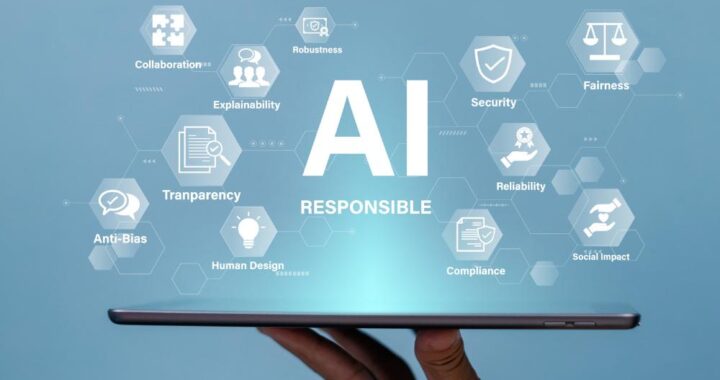
As AI becomes more powerful, responsible development becomes increasingly important. Technology should be designed with privacy, security, transparency, reliability, and fairness in mind.
AI systems can sometimes produce inaccurate information, misunderstand context, or reflect biases present in their training data. Users therefore need to evaluate important outputs rather than automatically accepting everything an AI system generates.


Responsible AI also involves understanding where human judgment is necessary. High-impact decisions involving people should receive appropriate human oversight.
The goal should not simply be to create increasingly powerful machines. It should be to develop technology that provides meaningful benefits while reducing unnecessary risks. 🛡️🤝
🚀 Looking Toward the Future
The future of AI is difficult to predict precisely, but one thing is clear: artificial intelligence is becoming an increasingly important part of the digital world.
AI Next represents an opportunity to rethink how technology interacts with people. Future systems may become more conversational, multimodal, personalized, efficient, and capable of working across different digital environments.
The most interesting question is not whether AI will become more powerful. It is how people will choose to use that power.
Businesses may discover new ways to innovate. Students may gain personalized learning support. Researchers may explore previously difficult questions. Creators may experiment with new forms of expression. And everyday users may gain digital assistants capable of helping with an expanding range of tasks. 🌍💻
✨ Final Thoughts
AI Next is more than a technological trend. It represents a broader transition toward intelligent digital systems that can understand information, generate content, solve problems, and collaborate with people.
The future will likely depend on a partnership between human intelligence and artificial intelligence. Machines can provide speed, scale, and computational capabilities, while people contribute creativity, judgment, empathy, values, and imagination.
As this technology continues to evolve, learning how to use AI thoughtfully may become one of the most valuable digital skills of the coming years. 🚀🤖