Artificial Intelligence (AI) programming is one of the fastest-growing fields in technology. It combines software development with mathematics, data science, and machine learning to create systems that can perform tasks that normally require human intelligence. From virtual assistants and recommendation engines to self-driving cars and medical diagnosis tools, AI programming powers many of the technologies we use every day.
🤔 What Is AI Programming?
AI programming is the process of designing and developing software that can learn from data, recognize patterns, make decisions, and improve its performance over time.
Unlike traditional software, where every rule is explicitly programmed, AI systems often learn these rules from examples.
For example:
- 🗣️ Voice assistants understand spoken language.
- 📷 Image recognition systems identify objects in photos.
- 🌐 Translation tools convert text between languages.
- 💬 AI chatbots answer customer questions naturally.
🧠 Types of Artificial Intelligence
Narrow AI
Designed for specific tasks, such as:
- Email spam detection
- Face recognition
- Recommendation systems
- Speech recognition
This is the most common type of AI today.
General AI
A theoretical form of AI that could perform any intellectual task a human can do. It remains an active area of research.
Super AI
A hypothetical AI that would surpass human intelligence across virtually all domains. This concept is mostly discussed in research and philosophy.
💻 Programming Languages for AI


Several programming languages are used in AI development:
🐍 Python
The most popular AI language because it is:
- Easy to learn
- Has extensive AI libraries
- Strong community support
Popular libraries include:
- NumPy
- Pandas
- TensorFlow
- PyTorch
- Scikit-learn
- OpenCV
☕ Java
Commonly used for:
- Enterprise AI applications
- Android development
- Large-scale systems
⚡ C++
Ideal for:
- High-performance AI
- Robotics
- Game AI
📊 R
Frequently used for:
- Statistical analysis
- Data visualization
- Research
📚 Core AI Concepts
Machine Learning (ML)
Machine learning enables computers to learn from data instead of relying only on hand-written rules.
Examples include:
- Predicting house prices
- Detecting fraud
- Product recommendations
Deep Learning
Deep learning is a branch of machine learning that uses artificial neural networks with many layers.
It excels at:
- Image recognition
- Speech recognition
- Language understanding
- Generative AI
Natural Language Processing (NLP)
NLP allows computers to understand and generate human language.
Applications include:
- Chatbots
- Language translation
- Text summarization
- Sentiment analysis
Computer Vision
Computer vision enables machines to interpret images and videos.
Examples:
- Self-driving cars
- Medical imaging
- Face recognition
- Security surveillance
Reinforcement Learning
An AI agent learns through trial and error by receiving rewards for successful actions.
Used in:
- Robotics
- Autonomous systems
- Game-playing AI
- Resource optimization
🛠️ Popular AI Frameworks
Some of the most widely used frameworks are:
- 🔥 TensorFlow
- ⚡ PyTorch
- 📊 Scikit-learn
- 👁️ OpenCV
- 🤗 Hugging Face Transformers
- ⚙️ Keras
Each framework serves different purposes, from classical machine learning to advanced deep learning and computer vision.
🔄 Typical AI Development Workflow
- 📥 Collect data.
- 🧹 Clean and prepare the data.
- 📊 Explore and visualize patterns.
- 🧠 Choose a suitable model.
- 🏋️ Train the model.
- 📈 Evaluate performance.
- 🚀 Deploy the model.
- 🔁 Monitor and improve it over time.
🌍 Real-World Applications
AI programming is used in many industries:
- 🏥 Healthcare: Disease detection, medical imaging, drug discovery.
- 💰 Finance: Fraud detection, algorithmic trading, risk analysis.
- 🛒 Retail: Product recommendations, inventory forecasting.
- 🚗 Transportation: Driver assistance and route optimization.
- 🎓 Education: Personalized learning and automated tutoring.
- 🌾 Agriculture: Crop monitoring and precision farming.
- 🏭 Manufacturing: Predictive maintenance and quality inspection.
🎯 Skills Needed
To become an AI programmer, it helps to learn:
- ✅ Python
- ✅ Data structures and algorithms
- ✅ Linear algebra
- ✅ Probability and statistics
- ✅ Machine learning fundamentals
- ✅ SQL
- ✅ Git and version control
- ✅ Data visualization
- ✅ Cloud platforms (optional)
- ✅ Model deployment basics
🚀 A Beginner Learning Roadmap
- Learn Python programming.
- Study mathematics relevant to AI.
- Practice data analysis with NumPy and Pandas.
- Learn machine learning using Scikit-learn.
- Explore deep learning with TensorFlow or PyTorch.
- Build small projects.
- Create a portfolio showcasing your work.
- Continue learning as the field evolves.
💡 Sample Beginner Projects
- 😊 Sentiment analysis of reviews
- 📧 Spam email classifier
- 🖼️ Image classifier
- 💬 Simple chatbot
- 📈 Stock trend prediction (for learning purposes)
- 🎵 Music recommendation prototype
- 🎬 Movie recommendation system
- 🌦️ Weather prediction experiment
⚠️ Challenges in AI Programming
AI development comes with important considerations:
- Data quality and availability
- Bias and fairness
- Privacy and security
- Computational cost
- Model interpretability
- Ongoing maintenance as data changes
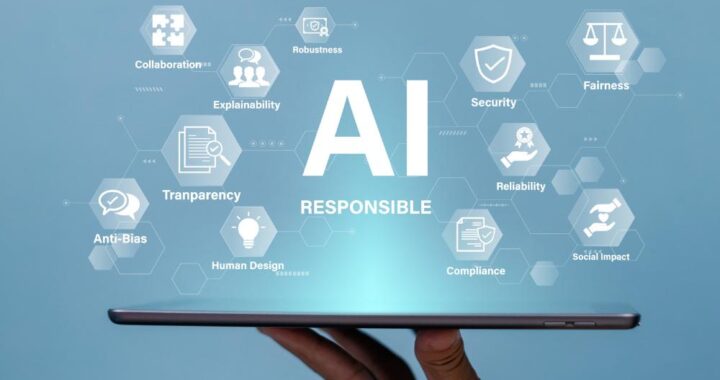
Responsible AI development includes testing, monitoring, and considering the impact on users.
🔮 The Future of AI Programming
AI is increasingly being integrated into software development, research, healthcare, education, and business. Areas such as multimodal AI, robotics, AI-assisted coding, and edge AI are expected to continue growing. As AI capabilities expand, developers will also need a stronger understanding of ethics, privacy, and governance.
❓ Frequently Asked Questions
Is Python the best language for AI?
Python is the most widely used language for AI because of its readability and extensive ecosystem, though other languages are valuable in specific domains.
Do I need advanced math?
A basic understanding is enough to start. As you progress, topics like linear algebra, calculus, and probability become increasingly useful.
Can beginners learn AI?
Yes. Many successful AI developers start with Python and gradually build their knowledge through hands-on projects.
Is AI programming a good career?
Demand for AI-related skills remains strong across many industries, making it an attractive career path for people who enjoy programming, problem-solving, and continuous learning.
🎉 Conclusion
AI programming combines software engineering with data-driven learning to create intelligent applications. Whether you’re interested in chatbots, image recognition, recommendation systems, or automation, the field offers many opportunities to build impactful technology. Starting with Python, learning machine learning fundamentals, and practicing through projects provides a solid foundation for entering this rapidly evolving area.