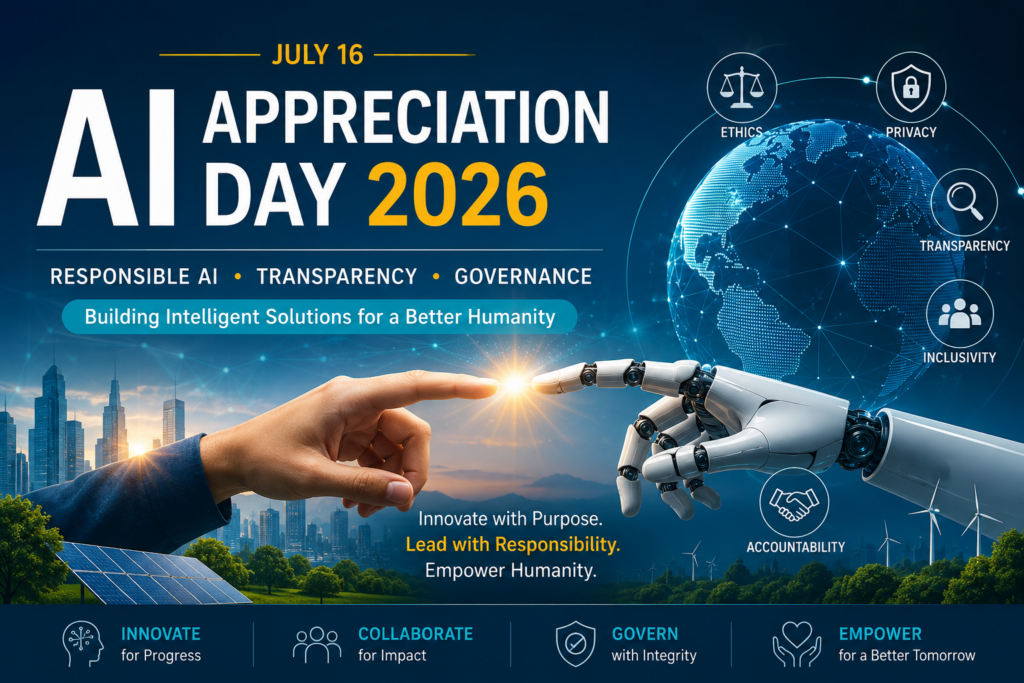
Celebrate AI Appreciation Day 2026 on July 16 by exploring responsible AI, transparency, governance, ethical innovation, and how artificial intelligence is shaping a better future for humanity.
Artificial Intelligence (AI) has rapidly evolved from a niche area of computer science into one of the most transformative technologies of the modern era. From healthcare and education to finance, transportation, manufacturing, and creative industries, AI is changing the way people live and work. Every year on July 16, AI Appreciation Day provides an opportunity to recognize these achievements while encouraging discussions about the responsible development of AI.
In 2026, AI Appreciation Day carries an especially meaningful message. The global focus is on responsible AI, transparency, governance, and ensuring that artificial intelligence continues to benefit humanity. As organizations accelerate AI adoption, the conversation has shifted from simply asking what AI can do to considering how it should be developed, deployed, and governed.
This year’s observance highlights the importance of creating AI systems that are ethical, trustworthy, secure, and aligned with human values.
What Is AI Appreciation Day?
AI Appreciation Day is an annual observance dedicated to recognizing the remarkable progress made in artificial intelligence. It celebrates the scientists, engineers, researchers, entrepreneurs, educators, policymakers, and organizations that continue to advance AI technologies while encouraging conversations about their responsible use.
The day also provides an opportunity to educate the public about both the opportunities and challenges associated with AI. Rather than viewing artificial intelligence solely as a technological breakthrough, AI Appreciation Day encourages a balanced understanding of its impact on society.
As AI becomes increasingly integrated into everyday life, appreciation also means acknowledging the responsibility that comes with developing powerful technologies.
Why AI Appreciation Day 2026 Matters
Artificial intelligence is no longer limited to research laboratories or large technology companies. Today, AI powers virtual assistants, recommendation systems, fraud detection tools, autonomous vehicles, language translation services, medical diagnostics, cybersecurity solutions, and countless other applications.
With AI influencing decisions that affect millions of people, ethical considerations have become more important than ever. AI Appreciation Day 2026 emphasizes that innovation should be accompanied by responsibility.
Organizations around the world are using this occasion to promote:
- Ethical AI development
- Transparent AI decision-making
- Fair and unbiased algorithms
- Strong AI governance
- Human-centered innovation
- Privacy and data protection
- Collaboration between governments, businesses, and researchers
These principles help create AI systems that are both innovative and trustworthy.
Responsible AI: The Foundation of Sustainable Innovation
Responsible AI refers to designing, developing, and deploying artificial intelligence in ways that respect human rights, fairness, safety, and accountability.
Organizations increasingly recognize that responsible AI is not just a regulatory requirement but also a competitive advantage. Businesses that build trustworthy AI solutions are more likely to earn customer confidence and long-term success.
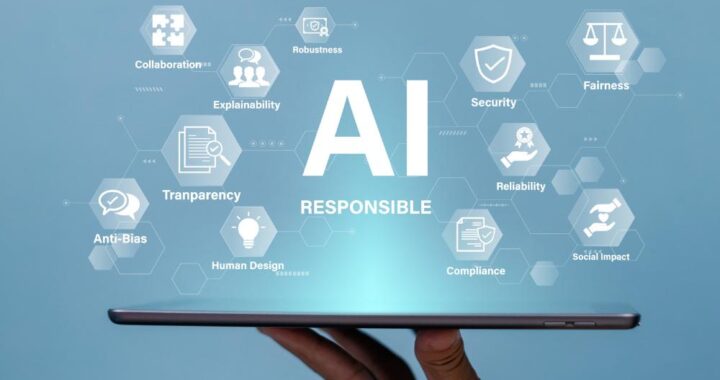
Responsible AI generally includes several core principles:
Transparency
Users should understand when they are interacting with AI and have access to clear information about how AI-generated recommendations or decisions are made whenever appropriate.
Fairness
Developers continuously work to reduce bias in AI models so that systems perform fairly across different populations and use cases.
Privacy
AI systems should protect sensitive information through secure data handling practices while respecting applicable privacy laws and regulations.
Accountability
Organizations remain responsible for the outcomes of AI systems and should implement oversight, testing, and governance processes throughout the AI lifecycle.
Safety and Reliability
AI should perform consistently, securely, and predictably, particularly in high-impact areas such as healthcare, transportation, and financial services.
Transparency and AI Governance
Transparency and governance have become central topics in global AI discussions.
AI governance refers to the policies, standards, and oversight mechanisms that guide how artificial intelligence is developed and used. Effective governance helps organizations balance innovation with ethical responsibility.
Strong AI governance often includes:
- Risk assessments before deployment
- Human oversight for high-impact decisions
- Regular model testing and monitoring
- Documentation of AI systems
- Compliance with evolving regulations
- Independent auditing where appropriate
Transparency complements governance by helping users understand the role AI plays in decision-making. This openness builds trust and encourages responsible adoption across industries.
AI Is Transforming Every Industry
One reason AI Appreciation Day has gained global recognition is the technology’s widespread impact across virtually every sector.
Healthcare
Artificial intelligence assists healthcare professionals with medical imaging analysis, predictive diagnostics, drug discovery, personalized treatment planning, and administrative automation, helping improve patient care and operational efficiency.
Education
AI-powered learning platforms support personalized education by adapting lessons to individual learning styles while assisting teachers with grading, lesson planning, and student engagement.
Business and Finance
Companies use AI to automate workflows, improve customer service, detect fraud, forecast demand, optimize supply chains, and generate valuable business insights from large datasets.
Manufacturing
AI enhances production through predictive maintenance, quality control, robotics, and operational optimization, improving productivity while reducing downtime.
Environmental Sustainability
Researchers use AI to monitor climate patterns, improve energy efficiency, optimize renewable energy systems, and support environmental conservation efforts.
These examples illustrate how AI can augment human capabilities rather than replace them.
Human-Centered AI
One of the strongest messages of AI Appreciation Day 2026 is the importance of keeping humans at the center of AI development.
Human-centered AI prioritizes technologies that enhance people’s lives, support decision-making, improve accessibility, and expand opportunities. Instead of replacing human creativity, empathy, and judgment, AI should complement these uniquely human strengths.
Organizations increasingly encourage collaboration between AI systems and human experts to achieve better outcomes across medicine, education, scientific research, engineering, and creative industries.
Challenges That Require Continued Attention
Although AI offers enormous opportunities, important challenges remain.
Developers, researchers, and policymakers continue working to address issues such as:
- Algorithmic bias
- Data privacy concerns
- Cybersecurity risks
- Misinformation and synthetic content
- Intellectual property considerations
- Workforce adaptation and reskilling
- Responsible deployment of advanced AI systems
Addressing these challenges requires ongoing collaboration among governments, academic institutions, technology companies, civil society organizations, and the public.
The Future of AI
The future of artificial intelligence is expected to be defined by both innovation and responsibility.
Emerging trends include:
- More explainable AI systems
- Improved AI safety research
- Greater international cooperation on AI standards
- Expanded use of AI in scientific discovery
- Smarter healthcare technologies
- Sustainable AI infrastructure
- Human-AI collaboration across industries
As AI capabilities continue to advance, responsible governance and ethical design will remain essential to ensuring long-term societal benefits.
How You Can Celebrate AI Appreciation Day 2026
Whether you are a student, developer, entrepreneur, educator, or simply interested in technology, there are many meaningful ways to participate:
- Learn about AI ethics and responsible AI principles.
- Explore how AI is improving healthcare, education, and sustainability.
- Attend webinars, conferences, or online discussions about AI.
- Experiment with AI tools while using them responsibly.
- Share educational resources about trustworthy AI.
- Encourage thoughtful conversations about the future of AI.
Even small efforts to increase AI literacy contribute to a more informed and responsible digital future.
Conclusion
AI Appreciation Day 2026 is more than a celebration of technological progress. It is a reminder that the future of artificial intelligence depends on how responsibly it is designed, governed, and used.
As AI becomes increasingly embedded in everyday life, society has an opportunity to shape its development through transparency, accountability, fairness, privacy protection, and human-centered innovation.
By working together, researchers, governments, businesses, educators, and communities can ensure that AI remains a force for positive change—one that empowers people, drives sustainable innovation, and benefits humanity for generations to come.
Frequently Asked Questions (FAQs)
1. When is AI Appreciation Day 2026?
AI Appreciation Day 2026 is observed on July 16, 2026.
2. What is the purpose of AI Appreciation Day?
The day celebrates advances in artificial intelligence while promoting awareness of responsible AI development, transparency, ethics, and governance.
3. What is responsible AI?
Responsible AI refers to designing and deploying AI systems that are fair, transparent, safe, accountable, privacy-conscious, and aligned with human values.
4. Why is AI transparency important?
Transparency helps users understand how AI systems operate, builds trust, and supports accountability in AI-assisted decisions.
5. What is AI governance?
AI governance includes the policies, standards, oversight processes, and regulations that guide the ethical development and deployment of artificial intelligence.
6. How can individuals celebrate AI Appreciation Day?
People can learn about AI, explore ethical AI practices, attend educational events, use AI responsibly, and share knowledge about trustworthy AI.
7. What industries benefit most from AI?
Healthcare, education, finance, manufacturing, transportation, agriculture, retail, cybersecurity, and scientific research are among the sectors benefiting significantly from AI technologies.
8. Why is human-centered AI important?
Human-centered AI ensures that technology enhances human capabilities, respects fundamental rights, supports informed decision-making, and creates positive societal outcomes.