Focus Keyword: AI Next
Meta Description: Discover how AI Next is transforming industries, education, healthcare, business, and everyday life. Explore emerging AI trends, innovations, opportunities, and challenges shaping the future.
🌍 Introduction
Artificial intelligence has rapidly evolved from a futuristic concept into an essential part of daily life. AI Next represents the next generation of intelligent technologies that are reshaping industries, improving productivity, and enhancing human creativity. From advanced language models and autonomous systems to healthcare innovations and smart cities, AI is becoming increasingly integrated into the way we live and work.
As organizations invest more heavily in AI research and development, businesses, educators, healthcare providers, and governments are discovering new opportunities to leverage intelligent systems. The future is no longer about whether AI will influence society it is about how we can responsibly harness its potential.


📑 Table of Contents
- 🤖 What is AI Next?
- 💡 The Evolution of Artificial Intelligence
- 🏢 AI in Business and Industry
- 🏥 AI in Healthcare
- 🎓 AI in Education
- 🌍 AI and Smart Cities
- 🔐 Ethics and Responsible AI
- 🚀 Future Trends
- ❓ Frequently Asked Questions
- ✅ Conclusion
🤖 What is AI Next?
AI Next refers to the next wave of artificial intelligence technologies that combine advanced machine learning, generative AI, robotics, edge computing, and multimodal systems. Unlike earlier AI systems that focused on narrow tasks, modern AI can understand text, images, audio, video, and structured data together.
These capabilities allow AI to assist with:
- 📊 Business analytics
- 💬 Customer support
- 🎨 Content creation
- 💻 Software development
- 🩺 Medical diagnosis
- 🚗 Autonomous transportation
- 🌱 Environmental monitoring
AI Next emphasizes collaboration between humans and intelligent systems rather than replacing people.
💡 The Evolution of Artificial Intelligence
Artificial intelligence has progressed through several stages:
📚 Rule-Based Systems
Early AI relied on manually programmed rules and could only perform predefined tasks.
🧠 Machine Learning
Machine learning enabled computers to identify patterns from data without explicit programming.
🔍 Deep Learning
Deep neural networks dramatically improved image recognition, speech processing, and natural language understanding.
🎨 Generative AI
Modern AI can generate:
- ✍️ Articles
- 🎵 Music
- 🎬 Videos
- 🖼️ Images
- 💻 Computer code


🏢 AI in Business and Industry
Businesses worldwide are integrating AI into daily operations to improve efficiency and customer experiences.
📈 Marketing
AI helps marketers:
- Personalize advertisements
- Predict customer behavior
- Optimize campaigns
- Generate content
- Analyze competitors
💼 Finance
Financial institutions use AI for:
- Fraud detection
- Risk assessment
- Automated trading
- Customer service
- Credit evaluation
🏭 Manufacturing
Factories use AI-powered robots for:
- Quality inspection
- Predictive maintenance
- Supply chain optimization
- Inventory forecasting
🏥 AI in Healthcare
Healthcare is experiencing one of the biggest AI revolutions.
Doctors use AI to assist with:
- 🩺 Disease detection
- 🔬 Medical imaging
- 🧬 Drug discovery
- 📋 Clinical documentation
- 💊 Personalized treatment planning
Benefits include:
- Faster diagnosis
- Improved patient outcomes
- Reduced administrative work
- Better resource allocation
🎓 AI in Education
AI is transforming learning for students and educators alike.
Applications include:
- 📚 Personalized learning paths
- 🤖 AI tutors
- 📝 Automated grading
- 🌐 Language translation
- 🎥 Interactive educational content
Students benefit from learning at their own pace, while teachers gain more time to focus on instruction and mentoring.
🌍 AI and Smart Cities
Smart cities leverage AI to improve urban living.
Examples include:
- 🚦 Intelligent traffic management
- 💡 Energy optimization
- 🚌 Public transportation planning
- 🌳 Environmental monitoring
- 🚨 Emergency response systems
These technologies help reduce congestion, lower emissions, and improve public services.
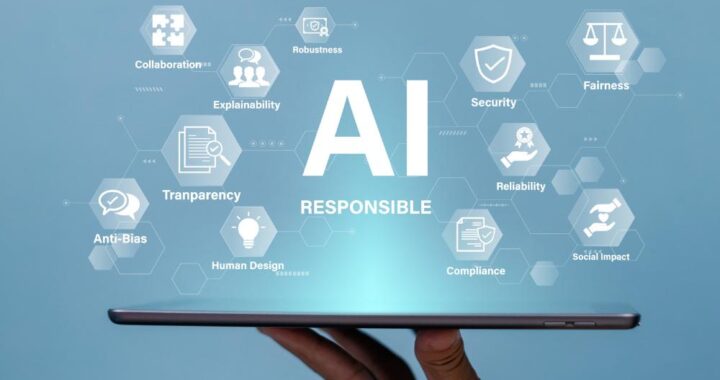
🔐 Ethics and Responsible AI
As AI capabilities grow, ethical considerations become increasingly important.
Key challenges include:
- 🔒 Data privacy
- ⚖️ Fairness and bias
- 🛡️ Cybersecurity
- 📜 Regulatory compliance
- 👥 Human oversight
Responsible AI development requires transparency, accountability, and collaboration among developers, policymakers, and society.
🚀 Future Trends
Several trends are shaping the future of AI:
- 🤝 Human-AI collaboration
- 🌐 Multimodal AI systems
- 📱 Edge AI for faster processing
- 🤖 Autonomous robotics
- 💻 AI-assisted software development
- 🔬 Scientific discovery acceleration
- 🎨 Creative AI tools
- 🌱 Sustainable AI infrastructure
Organizations that invest in AI literacy and governance will be better positioned to benefit from these advancements.
❓ Frequently Asked Questions
What is AI Next?
AI Next refers to the next generation of artificial intelligence technologies that integrate advanced learning, reasoning, and multimodal capabilities.
Is AI replacing human jobs?
AI automates certain repetitive tasks, but it also creates new roles and opportunities. Many experts expect AI to augment human work rather than replace it entirely.
Which industries benefit most from AI?
Healthcare, finance, manufacturing, education, retail, logistics, entertainment, and agriculture are among the sectors seeing significant AI adoption.
Can small businesses use AI?
Yes. Many affordable AI tools are available for customer service, marketing, analytics, and productivity, making AI accessible to organizations of all sizes.
✅ Conclusion
AI Next represents a significant step forward in the evolution of artificial intelligence. As AI technologies become more capable and widely adopted, they have the potential to improve healthcare, education, business operations, scientific research, and everyday life.
Realizing these benefits will depend on responsible development, thoughtful governance, and continued investment in human skills. By embracing innovation while addressing ethical and societal challenges, individuals and organizations can help shape an AI-powered future that is both productive and inclusive.