Artificial Intelligence (AI) has transformed from a futuristic concept into a technology that influences almost every industry. Just five years ago, many of today’s AI-focused careers didn’t exist—or were only beginning to emerge. As generative AI, large language models, computer vision, and automation become mainstream, organizations are creating entirely new job roles to ensure AI systems are accurate, ethical, secure, and beneficial.
Whether you’re a student, professional, or someone planning a career change, understanding these emerging AI careers can help you prepare for the future.
🌟 Why AI Is Creating New Careers
The rapid adoption of AI has created demand for professionals who can develop, monitor, improve, and govern intelligent systems. Unlike previous technological revolutions, AI doesn’t just automate repetitive tasks—it collaborates with humans to create content, analyze data, write software, and make decisions.
This shift has generated specialized roles requiring a blend of technical expertise, communication skills, ethics, and business understanding.
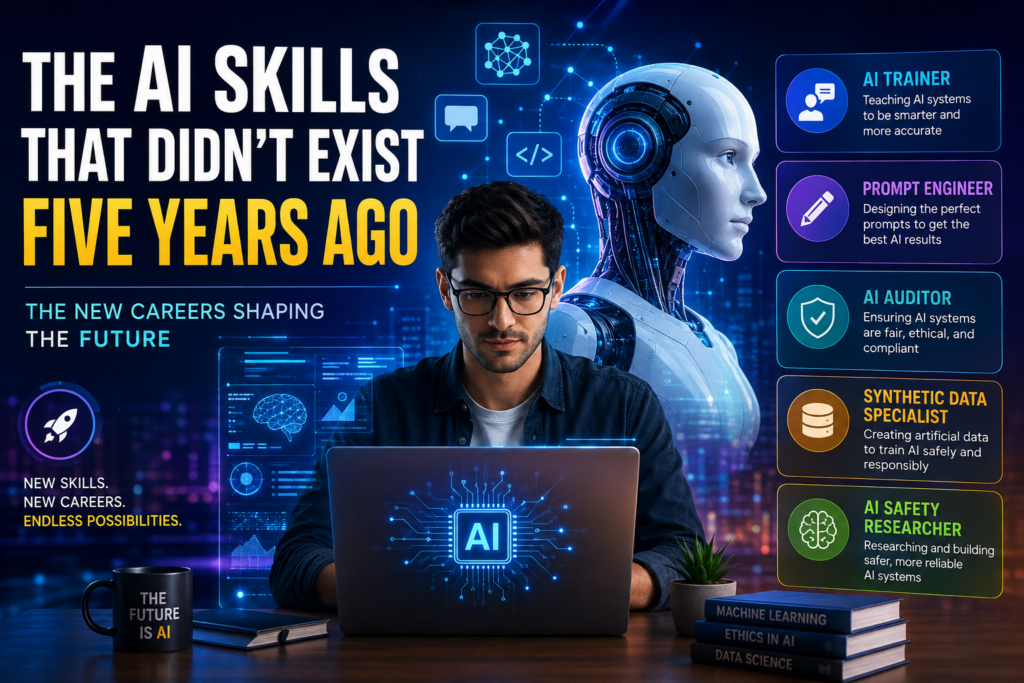
Some of the fastest-growing AI careers include:
- AI Trainers
- Prompt Engineers
- AI Auditors
- Synthetic Data Specialists
- AI Safety Researchers
Let’s explore each of them.
🎓 1. AI Trainer


What Does an AI Trainer Do?
AI trainers teach AI systems how to produce better results. They evaluate AI-generated responses, identify mistakes, label training data, and provide human feedback that improves model performance.
Instead of writing traditional software code, AI trainers improve AI by teaching it through examples.
Daily Responsibilities
- ✅ Review AI-generated responses
- ✅ Label images, text, audio, or videos
- ✅ Rank multiple AI answers
- ✅ Correct factual errors
- ✅ Improve AI accuracy
- ✅ Test new AI features
Required Skills
- Strong communication
- Critical thinking
- Attention to detail
- Data annotation
- Language proficiency
- Basic AI knowledge
Average Salary
- Entry Level: $45,000–$70,000/year
- Experienced: $80,000–$120,000/year
Industries Hiring
- Healthcare
- Finance
- Education
- E-commerce
- Technology
💬 2. Prompt Engineer


What Is Prompt Engineering?
Prompt engineering is the art of communicating with AI systems effectively.
A prompt engineer designs precise instructions that help AI generate better outputs.
Instead of programming through code, prompt engineers program through language.
Example
Basic Prompt:
Write a marketing email.
Optimized Prompt:
Write a professional marketing email for a new eco-friendly water bottle targeting college students using persuasive language and a friendly tone.
The second prompt produces significantly better results.
Responsibilities
- Create prompt libraries
- Test AI outputs
- Optimize AI workflows
- Build AI assistants
- Improve productivity
Skills Needed
- Writing
- Logic
- AI tools
- Experimentation
- Communication
- Domain expertise
Industries
- Marketing
- Software
- Customer support
- Education
- Healthcare
- Legal
🔍 3. AI Auditor


What Is an AI Auditor?
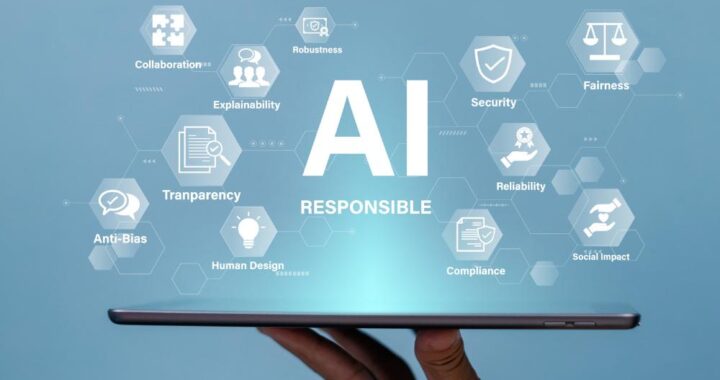
As AI becomes more powerful, companies need experts who ensure AI behaves responsibly.
AI auditors inspect AI systems for:
- Bias
- Fairness
- Privacy
- Transparency
- Security
- Regulatory compliance
Think of them as quality inspectors for intelligent systems.
Responsibilities
- Audit AI models
- Detect algorithmic bias
- Review AI decision-making
- Verify compliance
- Document risks
- Recommend improvements
Skills
- Statistics
- Ethics
- Data science
- Machine learning
- Regulations
- Risk management
Industries
- Banking
- Government
- Insurance
- Healthcare
- Human Resources
📊 4. Synthetic Data Specialist


What Is Synthetic Data?
AI needs enormous datasets.
However, real-world data often contains:
- Private information
- Limited samples
- Legal restrictions
- Sensitive records
Synthetic data specialists generate realistic artificial data that preserves statistical patterns without exposing personal information.
Applications
- Self-driving cars
- Medical imaging
- Robotics
- Banking
- Cybersecurity
Responsibilities
- Create synthetic datasets
- Validate data quality
- Protect privacy
- Improve AI training
- Reduce bias
Skills
- Python
- Machine Learning
- Statistics
- Computer Vision
- Data Engineering
🛡️ 5. AI Safety Researcher


Why AI Safety Matters
As AI becomes increasingly capable, ensuring that these systems remain reliable, controllable, and aligned with human intentions is becoming more important.
AI safety researchers study how AI systems behave under different conditions and develop techniques to reduce harmful outputs, improve robustness, and make AI more dependable.
Responsibilities
- Study AI risks
- Improve alignment
- Prevent harmful outputs
- Test model reliability
- Develop safety benchmarks
- Research future AI systems
Skills
- Machine Learning
- Mathematics
- Cybersecurity
- Ethics
- Programming
- Research
Employers
- AI research labs
- Universities
- Technology companies
- Government agencies
📈 Other Emerging AI Careers
The AI ecosystem continues to expand. Other promising roles include:
| Career | Primary Focus |
|---|---|
| 🤖 AI Product Manager | Building AI-powered products |
| 📊 AI Business Consultant | AI strategy for organizations |
| 🧠 Machine Learning Engineer | Designing AI models |
| ☁️ AI Infrastructure Engineer | Scaling AI systems |
| 🔐 AI Security Specialist | Protecting AI systems |
| 🎨 AI Content Strategist | Human-AI content workflows |
| 🗣️ Conversational AI Designer | Creating chatbots and voice assistants |
| ⚖️ AI Policy Analyst | AI governance and regulation |
🎯 Skills That Will Be Most Valuable
No matter which AI career interests you, these transferable skills will be increasingly valuable:
💻 Technical Skills
- Python
- SQL
- Machine Learning fundamentals
- APIs
- Cloud computing
- Data analysis
🤝 Human Skills
- Communication
- Creativity
- Critical thinking
- Ethical reasoning
- Problem-solving
- Collaboration
🧰 AI Tools
- ChatGPT
- Claude
- Gemini
- GitHub Copilot
- Midjourney
- Cursor
- NotebookLM
📚 How to Prepare for an AI Career
You don’t necessarily need a computer science degree to enter many AI-related fields. A practical learning path could include:
- Learn AI fundamentals.
- Practice with leading AI tools.
- Build small real-world projects.
- Learn prompt design and evaluation.
- Develop programming skills (especially Python).
- Understand AI ethics and governance.
- Create a portfolio demonstrating your work.
- Stay current with new AI developments.
🌍 The Future of AI Jobs
The World Economic Forum and industry analysts expect AI to continue reshaping the labor market. While some repetitive tasks will become automated, new opportunities are emerging for people who can design, supervise, evaluate, and responsibly deploy AI systems. Roles combining technical expertise with creativity, ethics, and domain knowledge are likely to remain in high demand.
Rather than replacing human talent, many organizations are using AI to augment human capabilities, making adaptability and continuous learning key career advantages.
📝 Conclusion
Five years ago, careers like AI Trainer, Prompt Engineer, AI Auditor, Synthetic Data Specialist, and AI Safety Researcher were either rare or largely undefined. Today, they are among the fastest-growing roles in the AI ecosystem, reflecting the need for professionals who can build, evaluate, and govern increasingly capable AI systems.
For students, job seekers, and experienced professionals alike, developing a mix of AI literacy, technical skills, critical thinking, and ethical awareness can open doors to these emerging opportunities. As AI continues to evolve, the careers of tomorrow will likely include roles we haven’t even imagined yet—but those who keep learning will be well positioned to thrive in this rapidly changing landscape.