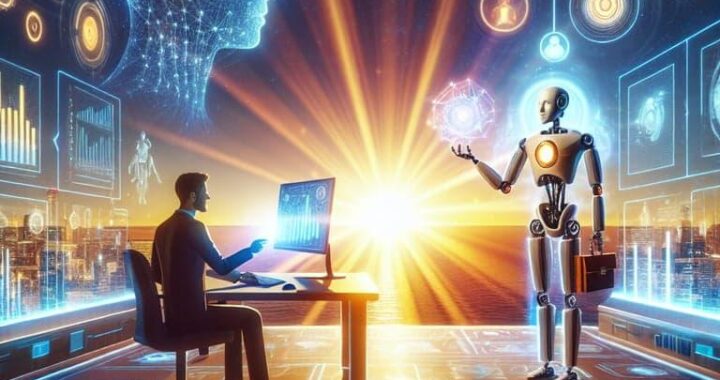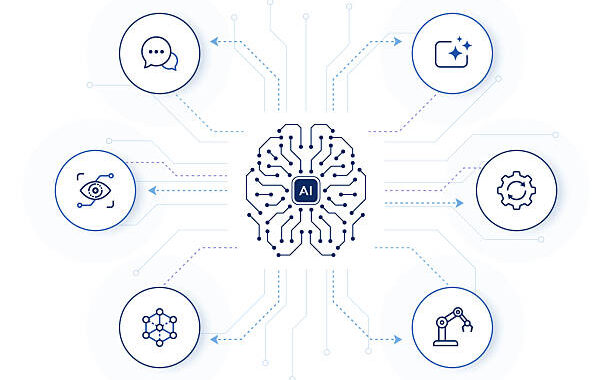
Artificial intelligence is no longer a distant concept found only in science-fiction movies. It has become one of the most influential technologies shaping modern society, transforming the way people work, communicate, learn, create, and solve problems. From intelligent assistants and recommendation systems to advanced research platforms and autonomous technologies, AI is increasingly becoming part of everyday life. 🌍💡
The next stage of artificial intelligence promises even more significant changes. As algorithms become more capable, computing infrastructure becomes more powerful, and organizations collect and process increasingly complex datasets, AI systems are moving beyond simple automation toward sophisticated reasoning, generation, prediction, and decision-support capabilities.
This emerging era can be described as AI Next—a broad concept representing the future direction of artificial intelligence and the technologies surrounding it.
AI Next is not simply about creating machines that can perform tasks faster. It is about developing systems capable of helping humans understand complex information, discover new possibilities, automate repetitive work, and collaborate across industries.
At the same time, the rapid development of AI creates important questions. How should AI be governed? How can organizations protect personal information? Which jobs will change? How can businesses use AI responsibly? What skills will people need in an increasingly automated economy?
Understanding these questions is essential because the future of AI will not be determined by technology alone. It will also be shaped by people, institutions, educators, businesses, researchers, governments, and communities.
Understanding the Meaning of AI Next 🧠🤖
AI Next can be understood as the evolving generation of artificial intelligence technologies that are becoming more capable, adaptable, multimodal, and integrated into everyday workflows.
Earlier generations of software were largely dependent on explicit instructions. Traditional programs performed predefined operations according to rules written by developers. Machine learning introduced a different approach by allowing systems to identify patterns in data and improve their performance through training.
Modern AI has expanded this concept further. Advanced models can process text, images, audio, video, code, and other forms of information. This ability to work across different information types is commonly referred to as multimodal intelligence.
Imagine an AI system receiving a written report, analyzing a graph, listening to an audio recording, and then producing a concise explanation. Such capabilities demonstrate how AI is becoming increasingly flexible.
Generative AI represents another major development. Instead of simply classifying existing information, generative systems can produce new text, images, software code, audio, and other content based on user instructions.
This has opened new opportunities for creativity and productivity. Writers can use AI for brainstorming, developers can use it to assist with programming, researchers can use it to organize information, and educators can use it to create learning materials. ✍️📚
However, AI Next should not be viewed simply as a collection of increasingly powerful models. It also includes the infrastructure, data systems, interfaces, security practices, governance frameworks, and human skills needed to use AI effectively.
The future of AI will therefore depend on an ecosystem rather than one technology.
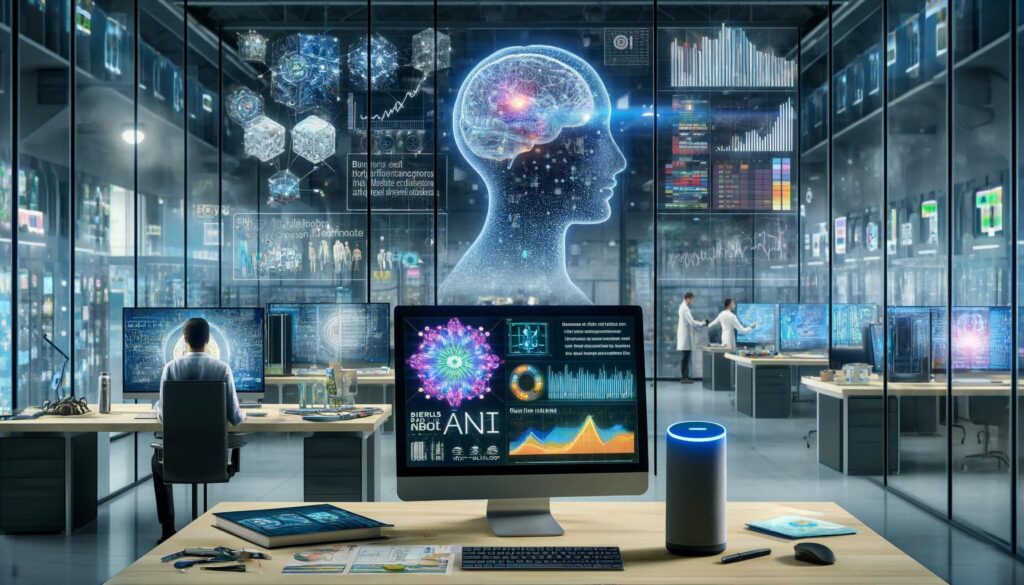
The Evolution of Artificial Intelligence 📜➡️🚀
The development of artificial intelligence has taken place over many decades.
Early AI research explored whether computers could imitate aspects of human reasoning. Researchers experimented with symbolic logic, rule-based systems, problem-solving programs, and early forms of machine learning.
These approaches achieved impressive results in specific situations but often struggled when environments became unpredictable or data became complex.
Machine learning changed the field by enabling algorithms to learn patterns from examples. Instead of programming every possible rule manually, developers could provide data and allow models to identify statistical relationships.
Neural networks became increasingly important as researchers developed methods for training larger and deeper models.
The availability of powerful graphics processing units, large datasets, cloud computing, and improved algorithms accelerated progress dramatically.
Deep learning enabled major advances in areas such as image recognition, speech processing, natural-language understanding, and recommendation systems.
Then came transformer-based architectures and large-scale foundation models. These technologies contributed to rapid advances in language and multimodal AI.
Today, AI systems can assist with tasks that once appeared difficult for machines, including summarization, translation, coding, content generation, visual analysis, and complex information processing.
The trajectory of AI demonstrates an important lesson: technological progress rarely happens through a single breakthrough. It usually results from the combination of algorithms, hardware, data, research, engineering, and practical experimentation.
AI Next will likely follow the same pattern.
Future advances may come from better reasoning techniques, more efficient computing, improved training methods, specialized models, stronger evaluation systems, and entirely new approaches that researchers have not yet fully developed. 🔬⚡
AI Next and the Future of Work 💼🤝
One of the biggest areas affected by artificial intelligence will be employment.
AI can automate repetitive activities, accelerate information processing, and support knowledge workers. This does not necessarily mean that every job will disappear. In many cases, individual tasks may change while the broader occupation remains.
For example, a marketing professional may use AI to generate initial campaign ideas while spending more time on strategy and customer understanding.
A software developer may use AI-assisted coding tools to produce routine code faster while focusing more heavily on architecture, testing, security, and product decisions.
A teacher may use AI to create draft learning materials but remain responsible for classroom interaction, mentoring, assessment, and emotional support.
Healthcare professionals may use AI-assisted systems to organize information or identify patterns, while human expertise remains essential for patient communication and clinical judgment.
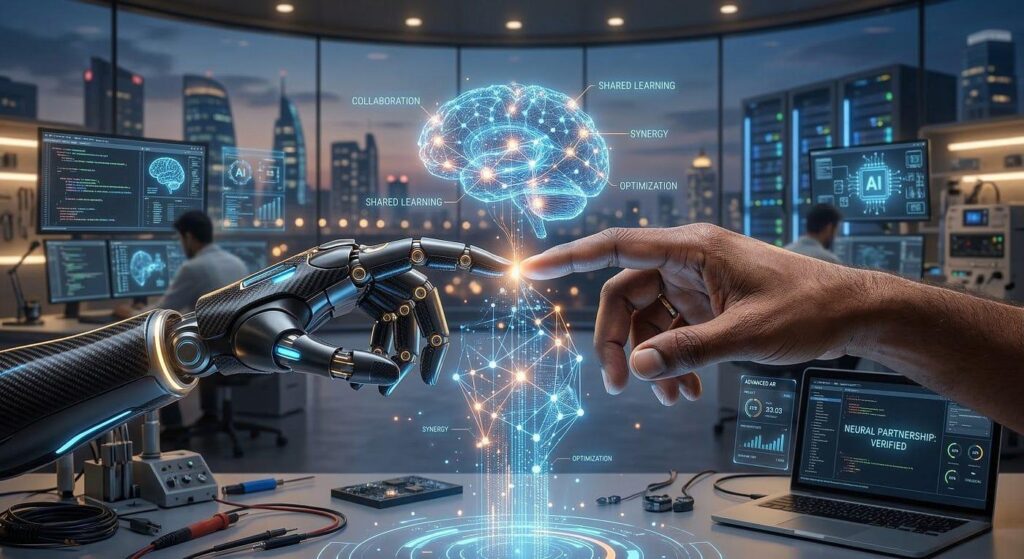
The workplace of the future may therefore involve increased collaboration between humans and intelligent software.
Human skills will remain important. Creativity, critical thinking, communication, empathy, leadership, ethical reasoning, domain expertise, and decision-making are difficult to reduce to simple automation.
At the same time, digital literacy will become increasingly important.
Workers who understand how AI systems function—and especially how to use them responsibly—may have an advantage in organizations adopting these technologies.
This does not mean everyone needs to become an AI engineer.
Instead, professionals can learn how AI applies to their particular field. A lawyer can understand AI-assisted research. A designer can learn about generative visual tools. A business manager can understand AI workflow automation. A researcher can explore AI-supported analysis.
The future of work may therefore reward people who can combine domain knowledge with technological fluency. 🚀
AI in Education and Learning 📚🎓
Education is another area where AI Next could have a major influence.
Traditional education often relies on standardized materials and schedules. AI systems could make learning more personalized by adapting explanations, examples, practice exercises, and feedback to individual learners.
A student struggling with a mathematical concept could request another explanation using simpler language. A language learner could practice conversations with an AI system. A programming student could receive assistance identifying errors in a piece of code.
AI can also help educators with administrative work. Drafting lesson plans, generating quiz questions, organizing educational resources, and summarizing classroom information may become more efficient.
However, AI should not replace the human relationship at the center of education.
Teachers provide encouragement, context, mentorship, classroom leadership, and social interaction. Education is not simply the transfer of information.
Students also need to learn how to evaluate AI-generated content. AI systems can produce convincing but inaccurate information. Developing critical thinking is therefore more important, not less, in an AI-rich educational environment.
Schools and universities will need to teach students not only how to use AI tools but also how to question them.
Students should understand concepts such as verification, source evaluation, privacy, bias, copyright, and responsible technology use.
The goal should be to create learners who are empowered by AI rather than dependent on it. 🧑🎓💡
AI and Healthcare Innovation 🏥🧬
Healthcare could become one of the most important applications of advanced AI.
Modern medicine generates enormous amounts of information, including medical images, research papers, laboratory results, patient histories, and clinical data.
AI can potentially help professionals process this information more efficiently.
Machine learning systems have been studied for applications such as medical imaging analysis, disease-risk prediction, drug discovery, clinical decision support, and personalized treatment research.
AI can also contribute to administrative efficiency. Healthcare organizations often spend significant time processing documentation, scheduling, and managing information. Appropriate automation could reduce some administrative burdens.
However, healthcare AI requires exceptional care.
Medical decisions can have serious consequences, and AI systems may make errors. Data quality, privacy, bias, transparency, validation, and human oversight are essential.
AI should therefore be treated as a tool that can support qualified professionals rather than an automatic replacement for human medical judgment.
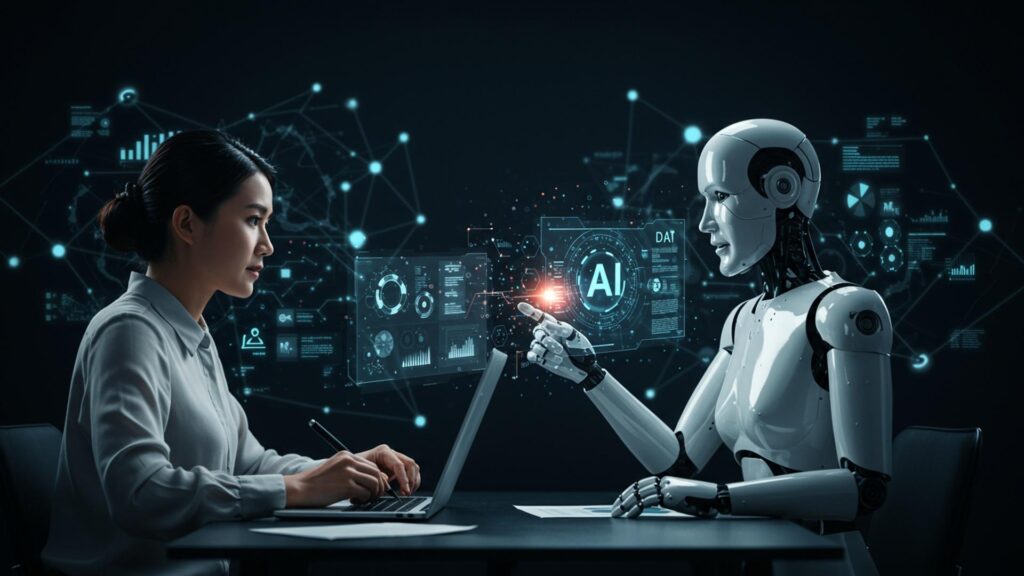
The future may involve increasingly sophisticated collaboration between clinicians and intelligent systems.
Imagine a doctor reviewing a patient’s history while an AI system highlights relevant patterns, summarizes research, and identifies questions that may deserve additional attention. The doctor remains responsible for interpreting the information and communicating decisions to the patient.
Such collaboration could improve efficiency while preserving the human element of healthcare. ❤️🩹
AI and Scientific Research 🔬🌌
Scientific discovery is another area where AI Next could produce transformative results.
Researchers increasingly face enormous datasets and complex computational problems. AI can help identify patterns that may be difficult to detect manually.
In fields such as biology, chemistry, physics, astronomy, climate science, and materials research, machine learning can assist with prediction, simulation, classification, and data analysis.
AI can also help researchers navigate scientific literature.
Instead of manually searching through thousands of documents, researchers may use intelligent systems to identify relevant studies, summarize concepts, compare findings, and generate hypotheses for further investigation.
However, AI-generated hypotheses still need rigorous scientific testing.
An AI system can suggest a possibility, but scientific knowledge requires evidence.
This distinction is essential. AI can accelerate the process of exploring ideas, but experiments, observations, peer review, and reproducibility remain central to scientific research.
The most exciting possibilities may emerge when AI becomes part of a broader scientific workflow.
Researchers could use AI to analyze data, identify potential relationships, design experiments, interpret results, and suggest new research directions.
This could potentially shorten parts of the discovery process and allow scientists to explore more possibilities than would otherwise be practical. 🧪✨
AI in Business and Entrepreneurship 📈💼
Businesses of all sizes are exploring artificial intelligence.
Large organizations may use AI for customer service, forecasting, fraud detection, logistics, marketing, software development, cybersecurity, and internal knowledge management.
Small businesses can also benefit.
AI tools can help entrepreneurs draft marketing materials, organize information, analyze customer feedback, automate routine communications, and develop early business concepts.
One of the biggest advantages of AI is scalability.
A small team can use software to perform tasks that previously required significant amounts of manual effort.
However, businesses should avoid adopting AI simply because it is fashionable.
Every AI implementation should have a clear purpose.
Organizations should ask:
What problem are we solving?
What data does the system require?
How accurate does the system need to be?
What happens when the AI makes a mistake?
Who is responsible for reviewing its output?
How will customer information be protected?
What measurable benefit will the system provide?
These questions help organizations distinguish meaningful AI adoption from technological experimentation without a clear objective.
Successful AI strategies often combine technology with process redesign and employee training.
The best results may come when organizations identify repetitive bottlenecks and then carefully integrate AI into existing workflows. ⚙️🚀
The Importance of AI Ethics ⚖️🤔
As AI becomes more powerful, ethical considerations become increasingly important.
AI systems learn from data, and data can contain biases or historical inequalities. If these patterns are not carefully evaluated, an AI system may produce unfair outcomes.
Privacy is another major concern. AI applications may process large amounts of personal information, creating questions about how data is collected, stored, used, and protected.
Transparency also matters.
People may want to understand why an AI system produced a particular recommendation or decision, especially in sensitive contexts.
Accountability is equally important. When an AI system makes a harmful mistake, organizations need clear processes for identifying responsibility and correcting the problem.
Ethical AI therefore requires more than technical performance.
Developers, organizations, policymakers, and users all have roles to play.
Responsible AI practices can include data governance, security testing, bias evaluation, human oversight, documentation, monitoring, and clear communication about system limitations.
The goal should not be to stop innovation. Instead, ethical frameworks should help ensure that innovation benefits people while reducing preventable harm. 🌍⚖️
AI Safety and Reliability 🛡️🤖
Powerful AI systems need to be reliable.
A system that performs well most of the time can still cause problems if users assume it is always correct.
AI models may generate inaccurate information, misunderstand instructions, or behave unexpectedly in unusual situations.
This is why evaluation is a central part of AI development.
Developers can test models against carefully designed benchmarks, real-world scenarios, adversarial examples, and domain-specific requirements.
Organizations should also establish processes for monitoring AI systems after deployment.
A model may behave differently as its environment changes. Data patterns evolve, user behavior changes, and new risks can emerge.
Human oversight remains important, particularly for high-impact applications.
Users should understand the difference between AI assistance and autonomous decision-making.
For low-risk tasks such as brainstorming, an occasional error may be inconvenient.
For high-stakes decisions, errors can have serious consequences.
AI Next will therefore require not only more capable systems but also better systems for evaluating, monitoring, and controlling those systems.
Reliability is not an optional feature. It is part of responsible technological development. 🔐
The Rise of Human-AI Collaboration 🤝🤖
One of the most promising ideas surrounding AI Next is collaboration.
Instead of asking whether humans or machines will win, it may be more productive to ask how they can complement one another.
Machines are excellent at processing large volumes of information quickly. Humans bring contextual understanding, lived experience, creativity, empathy, values, and judgment.
Together, these capabilities can create powerful workflows.
A researcher can ask AI to organize thousands of documents and then use human expertise to interpret the most important findings.
A designer can use generative AI to explore dozens of visual concepts and then apply professional judgment to develop the strongest idea.
A programmer can ask AI for implementation suggestions while reviewing the code for security, correctness, maintainability, and performance.
A business leader can use AI-generated analysis while considering organizational culture and human consequences.
This model shifts AI from being merely an automation tool toward being a collaborative assistant.
The most valuable AI systems may not be those that replace every human task. They may be systems that amplify human capabilities.
That distinction could shape how organizations design jobs, software, education, and professional training in the coming years. 🌟
AI and Creativity 🎨🎵✍️
Creativity has traditionally been viewed as a uniquely human capability, but generative AI has challenged assumptions about how creative work can be produced.
AI systems can generate written passages, images, music, designs, videos, and other forms of media.
This has created new opportunities for creators.
Writers can brainstorm concepts. Artists can explore visual directions. Musicians can experiment with arrangements. Filmmakers can develop storyboards. Entrepreneurs can create early branding concepts.
However, AI-generated creativity also raises questions about originality, attribution, copyright, and artistic identity.
A useful way to think about AI creativity is as a tool for exploration.
Human creators can provide the vision, context, taste, and final judgment while AI helps generate possibilities.
This can make creative experimentation faster.
At the same time, creators should understand the legal and ethical requirements associated with the tools they use.
The creative future may not be about choosing between human creativity and artificial intelligence.
Instead, it may involve new forms of collaboration in which human imagination guides increasingly capable computational systems. 🎨🤖✨
AI and Everyday Life 🏠📱
Artificial intelligence is already present in many ordinary experiences.
Recommendation engines suggest movies, music, products, and articles. Smartphone assistants help users perform tasks. Navigation systems estimate traffic conditions. Email platforms identify unwanted messages. Translation software helps people communicate across languages.
Future AI systems may become even more integrated.
Personalized assistants could help organize schedules, summarize information, prepare documents, and coordinate digital tasks.
Smart homes may use AI to optimize energy consumption and automate certain routines.
Travel platforms may provide more personalized recommendations based on preferences and constraints.
These conveniences can save time, but users should remain aware of privacy and security.
The more information an AI system receives, the more important data protection becomes.
Users should understand what information they are sharing and whether the service provides appropriate privacy controls.
Convenience should not come at the expense of informed decision-making.
Learning AI Skills for the Future 🎓🚀
As AI becomes more widespread, learning about it can benefit people from many professional backgrounds.
Not everyone needs advanced mathematics or programming skills.
Basic AI literacy can begin with understanding concepts such as machine learning, generative AI, datasets, model limitations, prompts, automation, privacy, and verification.
Professionals can then learn how AI applies to their particular field.
Students can experiment with educational applications.
Entrepreneurs can explore automation.
Researchers can learn AI-assisted analysis.
Content creators can explore generative tools.
Managers can study AI strategy and governance.
Developers can learn machine learning engineering and model integration.
The important principle is continuous learning.
AI technology changes quickly, so skills learned today may evolve tomorrow.
Rather than trying to memorize every new tool, focus on transferable concepts.
Learn how to evaluate an AI system.
Learn how to formulate clear instructions.
Learn how to verify outputs.
Learn how to recognize limitations.
Learn how to protect sensitive information.
Learn how to integrate AI into workflows responsibly.
These skills are likely to remain useful even as individual platforms change. 📚💡

The Future of AI Next 🌐🚀
Predicting the future of artificial intelligence is difficult.
Technology can develop in unexpected directions, and progress is influenced by research breakthroughs, economics, regulation, hardware availability, social adoption, and public attitudes.
Nevertheless, several broad trends are likely to remain important.
AI systems are likely to become more capable across multiple information types. Greater integration into software workflows may make AI less visible as a separate application and more like an underlying layer of digital infrastructure.
AI agents may increasingly assist with sequences of tasks rather than isolated requests.
Specialized AI systems may become more important in industries where accuracy and domain expertise are critical.
Efficiency will also matter. Organizations are likely to seek systems that provide useful results while reducing computational and financial costs.
Security will remain essential as AI becomes more deeply connected to digital systems.
Education will evolve as students and professionals learn to work alongside intelligent tools.
Perhaps most importantly, society will continue debating what role AI should play.
The future of AI is therefore not simply a technical question. It is a human question.
What should we automate?
What should remain under human control?
How should benefits be distributed?
How can innovation remain responsible?
What values should guide the development of increasingly powerful systems?
These questions will influence the shape of AI Next as much as technical breakthroughs do. 🌍🤔
Conclusion: Building a Better Future With AI 🤖🌟
AI Next represents a new chapter in the relationship between humans and technology.
Artificial intelligence has evolved from specialized experiments into a powerful general-purpose technology capable of influencing education, healthcare, science, business, creativity, communication, and everyday life.
Its potential is enormous.
AI can help people process information, automate repetitive tasks, explore ideas, accelerate research, and create new products and services.
But technological capability alone does not guarantee positive outcomes.
The future depends on how AI is designed, deployed, governed, and used.
Responsible development requires attention to privacy, security, fairness, transparency, reliability, and human oversight.
Individuals also have a role to play. Learning about AI, questioning its outputs, protecting personal information, and understanding its limitations can help people use these technologies more effectively.
The most exciting future may not be one where machines simply replace humans.
It may be one where humans and AI collaborate.
Imagine researchers exploring previously difficult scientific problems, teachers providing more personalized learning, entrepreneurs building new businesses with smaller teams, creators experimenting with new forms of expression, and professionals spending less time on repetitive administrative work.
These possibilities demonstrate why AI Next matters.
Artificial intelligence is not merely another software trend. It is becoming part of the infrastructure through which society creates, communicates, discovers, and solves problems.
The challenge is to ensure that progress remains aligned with human needs.
The future will not be created by AI alone.
It will be created by people who understand AI, question AI, improve AI, and choose how AI should be used. 🤖💡🌍
As we move into the next era of technological development, curiosity, education, responsibility, and collaboration will be among our most valuable resources.