Kraków is often introduced through its postcard-perfect Old Town, but the city’s real character stretches far beyond the main square. If you stay for a weekend and venture outward, you’ll find former Jewish quarters, industrial districts turned cultural hubs, riverside hangouts, and green escapes that most first-time visitors miss.
This guide takes you beyond the usual tourist loop and into a more layered, lived-in version of Kraków.
Day 1: Kazimierz – History, Street Art, and Café Culture
Start your journey in Kazimierz, once a separate town and later the historic Jewish quarter. Today it’s one of the most atmospheric parts of Kraków, where centuries-old synagogues sit beside indie galleries, vintage shops, and some of the city’s best cafés.
Walk slowly here—Kazimierz is not about rushing. You’ll find quiet courtyards, peeling facades covered in street art, and small bakeries that feel unchanged for decades.
A few highlights worth your time:
- The Old Synagogue and nearby Jewish heritage sites
- Plac Nowy, a lively square known for casual street food and late-night energy
- Independent cafés tucked into former residential buildings
In the evening, Kazimierz transforms. Bars light up, music spills onto the streets, and the district becomes one of the most social parts of Kraków.
Day 2 Morning: Wawel Hill and Riverside Walks
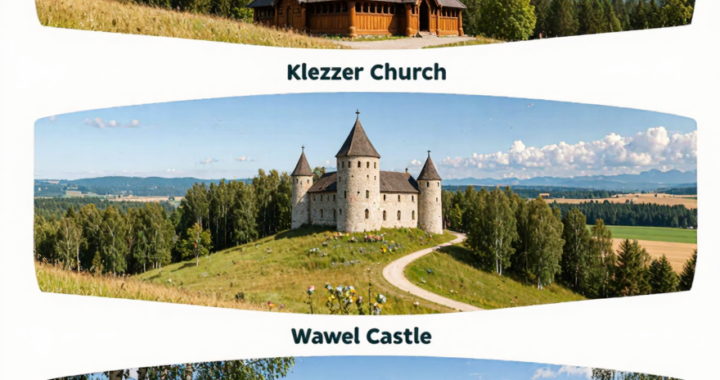
Before heading further out, start your morning at Wawel Castle. While it sits close to the Old Town, its hilltop location overlooking the Vistula makes it a natural transition point into a broader exploration of the city.
After visiting the castle grounds, head down toward the river. The Vistula embankments are one of Kraków’s most relaxing spaces—locals jog, cycle, or simply sit with coffee by the water.
It’s a good moment to slow down before heading into more modern or alternative districts.
Day 2 Afternoon: Nowa Huta – The Soviet-Era Counterpoint
Take a tram east to Nowa Huta, a district built as a model socialist city in the mid-20th century. It feels completely different from the rest of Kraków: wide avenues, monumental architecture, and a planned layout designed to reflect industrial optimism.
But beyond the ideology, Nowa Huta is fascinating for its contradictions. It’s both rigid and green, industrial and unexpectedly peaceful. You can:
- Walk around Central Square (Plac Centralny)
- Explore massive residential blocks with surprising architectural detail
- Join guided tours of Cold War-era bunkers and shelters
This is where you see how modern history shaped everyday life in Poland in a very tangible way.
Day 2 Late Afternoon: Schindler’s Factory and Podgórze
Cross back toward the southern side of the river to visit Schindler’s Factory, now a museum documenting Kraków under Nazi occupation. It’s not just about one man’s story—it’s a detailed, immersive look at wartime life in the city.
Afterward, explore Podgórze, a quieter district with its own historical depth. You’ll find:
- Ghetto memorials and preserved fragments of wartime history
- Riverside paths with fewer tourists
- Small cafés and local restaurants with a more residential feel
Optional Escape: Ojcowski National Park
If you’re willing to step outside the city entirely, take a short trip to Ojcowski National Park. It’s one of Poland’s smallest national parks but packed with limestone cliffs, caves, and castle ruins.
It’s an easy half-day trip and offers a complete contrast to urban Kraków—quiet forests, walking trails, and dramatic rock formations just a short ride away.
Final Thoughts
A weekend in Kraków doesn’t have to stay inside the Old Town loop. Once you step into Kazimierz, cross into Nowa Huta, or follow the Vistula into quieter districts, the city starts to feel less like a museum and more like a living, shifting landscape.
The Old Town may be the introduction—but the outskirts are where Kraków becomes memorable.