🌟 AINext: Exploring the Next Generation of Artificial Intelligence
Artificial Intelligence (AI) has rapidly evolved from a niche research field into a transformative force across nearly every industry. 🌍 From healthcare and finance to education, manufacturing, entertainment, and transportation, AI is reshaping how people work, communicate, and solve complex problems. As we move through 2026, the next wave of innovation—often referred to as AINext—is defined by smarter, faster, and more responsible AI systems that augment human capabilities rather than simply automate tasks.
This comprehensive guide explores the technologies, trends, applications, challenges, and future opportunities that define the next generation of AI. Whether you’re a student, developer, business leader, or technology enthusiast, AINext provides a roadmap to understanding the exciting future of intelligent systems.
🤖 What Is AINext?
AINext represents the evolution of artificial intelligence beyond traditional automation. It focuses on creating systems that can understand context, reason across multiple types of information, collaborate with people, and continuously improve through learning.
Core technologies include:
- 🧠 Machine Learning (ML)
- 💬 Natural Language Processing (NLP)
- 👁️ Computer Vision
- 🎨 Generative AI
- 🤖 Robotics
- 📊 Predictive Analytics
- ☁️ Cloud AI
- 🌐 Edge AI
Unlike earlier AI systems designed for narrow tasks, AINext emphasizes adaptability, multimodal understanding, and responsible deployment.
🌍 Why Artificial Intelligence Matters More Than Ever
AI has become a cornerstone of digital transformation. Organizations use AI to streamline operations, uncover insights from vast datasets, and deliver personalized experiences at scale.
Benefits include:
- ⚡ Faster decision-making
- 📈 Improved productivity
- 💰 Cost optimization
- 🎯 Personalized customer experiences
- 🔍 Better forecasting
- 🛡️ Enhanced cybersecurity
- 🚀 Accelerated innovation
- 🌱 Smarter resource management
As AI capabilities expand, businesses that integrate these technologies thoughtfully are better positioned to adapt to changing markets and customer expectations.
🛠️ The Building Blocks of Modern AI
Developing effective AI solutions requires a combination of data, algorithms, computing power, and domain expertise.
Essential components include:
📊 High-Quality Data
AI systems learn from data. Clean, diverse, and representative datasets are critical for accurate and reliable outcomes.
🧮 Machine Learning Algorithms
Algorithms identify patterns and make predictions. Popular approaches include supervised, unsupervised, and reinforcement learning.
☁️ Scalable Infrastructure
Cloud platforms and specialized hardware such as GPUs enable the training and deployment of increasingly sophisticated AI models.
🔐 Responsible Practices
Governance, privacy, security, and transparency help ensure AI systems are trustworthy and aligned with human values.
🎨 Generative AI: Creating New Possibilities


Generative AI has transformed the way people create content by producing text, images, code, audio, and even video from simple prompts.
Applications include:
- ✍️ Writing assistance
- 🎨 Image generation
- 💻 Code completion
- 🎬 Video production
- 🎵 Music composition
- 📢 Marketing content
- 📚 Educational materials
- 🎮 Game asset creation
These tools help professionals focus on creativity, strategy, and decision-making while reducing repetitive tasks.
🏥 AI Across Industries
Healthcare 🏥
Healthcare organizations use AI to:
- Assist with medical imaging analysis
- Support clinical decision-making
- Accelerate drug discovery
- Improve patient monitoring
- Optimize hospital operations
AI complements healthcare professionals by providing data-driven insights while keeping human expertise at the center of care.
Finance 💳
Financial institutions apply AI for:
- Fraud detection
- Risk analysis
- Customer support chatbots
- Credit evaluation
- Market forecasting
Real-time analytics help organizations respond quickly to changing financial conditions.
Education 🎓
AI enhances education through:
- Personalized learning paths
- Intelligent tutoring systems
- Automated assessment
- Accessibility tools
- Administrative automation
Teachers remain essential, with AI serving as a supportive educational resource.
Retail 🛍️
Retail businesses leverage AI for:
- Product recommendations
- Inventory optimization
- Demand forecasting
- Customer service automation
- Dynamic pricing
These capabilities contribute to more efficient operations and improved shopping experiences.
Manufacturing 🏭
Manufacturers use AI to:
- Predict equipment maintenance
- Improve quality control
- Optimize supply chains
- Enhance workplace safety
- Increase production efficiency
💼 AI in the Workplace
AI is changing how teams collaborate by automating repetitive processes and providing decision support.
Examples include:
- 📅 Scheduling assistance
- 📧 Email drafting
- 📊 Data analysis
- 📝 Meeting summaries
- 📂 Document organization
- 🔍 Knowledge retrieval
Rather than replacing human expertise, many organizations use AI to augment productivity and free employees to focus on higher-value work.
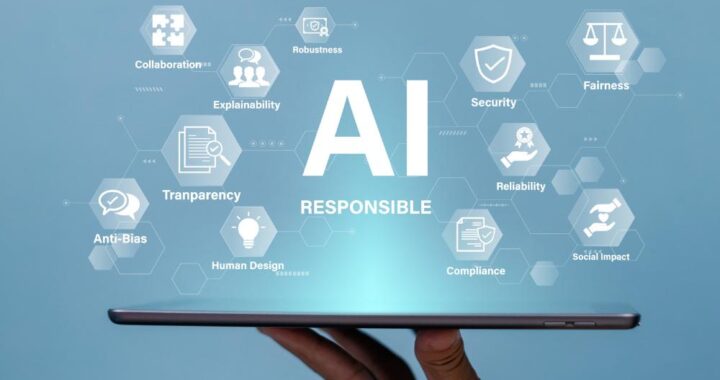
🔐 Responsible and Ethical AI
As AI adoption grows, ethical considerations become increasingly important.
Key principles include:
- 🔒 Privacy protection
- ⚖️ Fairness
- 📖 Transparency
- 🤝 Accountability
- 🛡️ Security
- 🌍 Inclusivity
Organizations should regularly evaluate AI systems for bias, reliability, and alignment with legal and ethical standards.
☁️ Cloud AI and Edge AI
Cloud AI provides scalable computing resources for training and deploying large models, while Edge AI enables intelligent processing directly on devices such as smartphones, cameras, and industrial equipment.
Benefits of Edge AI include:
- ⚡ Lower latency
- 📶 Reduced bandwidth usage
- 🔐 Enhanced privacy
- 🌐 Offline functionality
- 🔋 Improved efficiency
The combination of cloud and edge computing allows AI applications to be both powerful and responsive.
📈 Emerging AI Trends
Several trends are shaping the future of AINext:
- 🤖 Multimodal AI systems
- 🧠 Explainable AI
- 🌍 AI for sustainability
- 🔬 Scientific discovery with AI
- 🚗 Autonomous transportation
- 🏠 Smart homes and cities
- 🛡️ AI-powered cybersecurity
- 📡 Real-time analytics
These innovations are expected to expand AI’s role across both consumer and enterprise applications.
👩💻 Careers in Artificial Intelligence
The growing AI ecosystem offers opportunities for professionals with diverse backgrounds.
Popular roles include:
- 🤖 AI Engineer
- 📊 Data Scientist
- 💻 Machine Learning Engineer
- 🔬 AI Research Scientist
- 📈 AI Product Manager
- 🧠 Prompt Engineer
- 🔒 AI Security Specialist
- ☁️ AI Solutions Architect
Continuous learning and practical experience remain essential as tools and techniques evolve.
📚 Learning AI Effectively
To build a strong foundation:
- 📖 Learn Python programming.
- 📊 Study mathematics and statistics.
- 🤖 Understand machine learning fundamentals.
- ☁️ Explore cloud AI platforms.
- 🧪 Build hands-on projects.
- 🌐 Contribute to open-source initiatives.
- 📚 Read research papers and technical blogs.
- 🎤 Join AI communities and conferences.
A portfolio showcasing real projects often demonstrates practical skills more effectively than theory alone.
🌱 AI for Sustainability
AI is increasingly used to address global challenges by:
- 🌾 Improving agricultural efficiency
- ⚡ Optimizing energy consumption
- 🌍 Monitoring environmental changes
- 🚰 Managing water resources
- ♻️ Enhancing recycling systems
- 🌳 Supporting climate research
These applications highlight AI’s potential to contribute to sustainable development when implemented responsibly.
🚀 The Road Ahead
The future of AI will likely involve closer collaboration between humans and intelligent systems. Advances in reasoning, multimodal interaction, robotics, and personalization are expected to make AI more capable and accessible across industries.
Success with AINext will depend not only on technological progress but also on thoughtful governance, ethical design, and continuous investment in education and digital skills.
🎯 Final Thoughts
Artificial intelligence is no longer a distant vision—it is an integral part of today’s digital landscape. 🌟 AINext represents the next chapter, where AI becomes more adaptable, collaborative, and impactful across every sector.
Whether you’re exploring AI for career growth, business innovation, research, or personal learning, staying informed about emerging technologies and responsible practices will help you make the most of this rapidly evolving field. 🚀🤖📊
The future of AI is being built today, and those who embrace continuous learning and innovation will be well positioned to shape the intelligent solutions of tomorrow. ✨